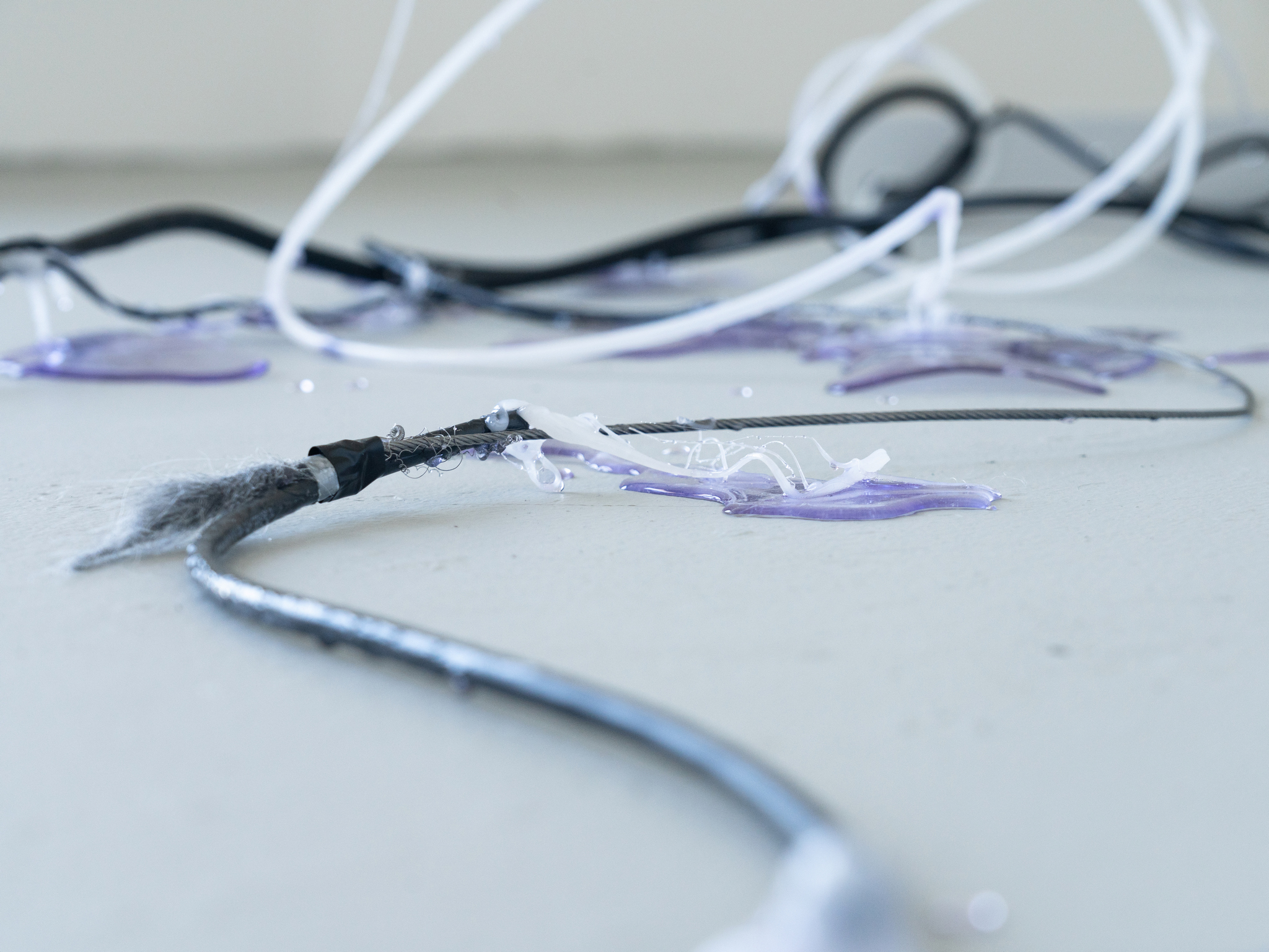
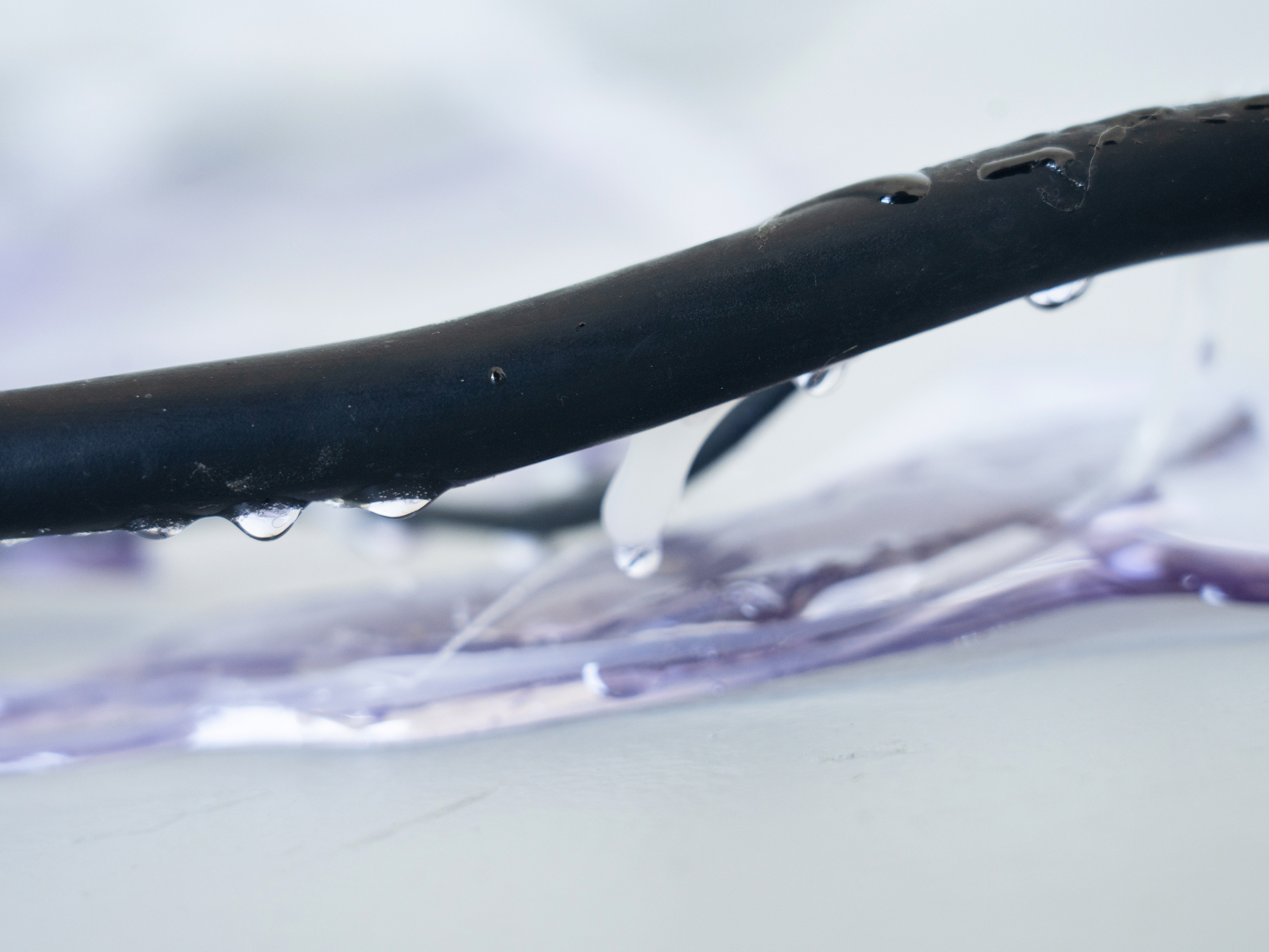
Grasp a Specific Thing
2026
Lightbox, monitor, looped video, cables, tubes, steel wire rope, agar, resin, hot glue, ink, tape, faux fur
Various dimensions
The work examines the systemic biases embedded in large language models: rather than neutrally representing the world, these models prioritize forms of knowledge that can be textualized, standardized, and encoded as data through the combined operations of training datasets, linguistic structures, and classificatory systems. In doing so, they flatten, substitute for, or even exclude forms of experience that are ambiguous, embodied, sensory, or otherwise resistant to encoding. As the model strives to achieve an ever more complete representation of a thing through increasingly specific descriptions, the very complexity and ineffability that constitute things as wholes continue to evade its grasp.